
How to Identify Original Leather
Spot the difference between genuine leather and synthetic imitations

Sourov Sarkar
Leather Crafting Expert
The Luxury of Authentic Leather
Leather is a symbol of luxury, and there’s a universal demand for leather products. However, nowadays, there are so many synthetic leather products that it has become tough to distinguish them from authentic leather products.
Use these simple methods to identify genuine leather and ensure you’re getting the quality you pay for.
5 Ways to Identify Genuine Leather
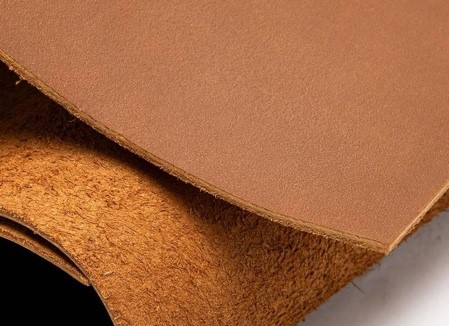
Check the Reverse Side
If possible, check out the reverse side of the leather. The reverse side of genuine leather which is also known as, the flesh side, consists of natural fibers that are sticking out and have an uneven surface. Most of the synthetic leathers are cloth-like or foam type materials.
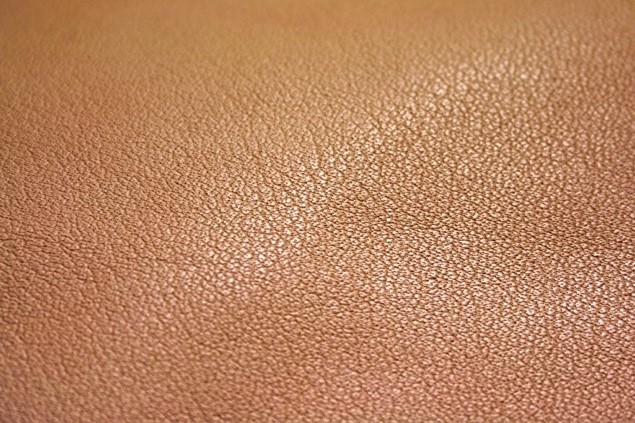
Examine the Grain Structure
The natural grains of animals have distinct textures and grain patterns. You can identify original leathers by the hair pore distribution on the grain surface. Although synthetic leathers now replicate the porous structure and grain texture of genuine leather, they can be distinguished because their textures and pores are evenly distributed. In contrast, actual leather features a chaotic arrangement of textures and pores.
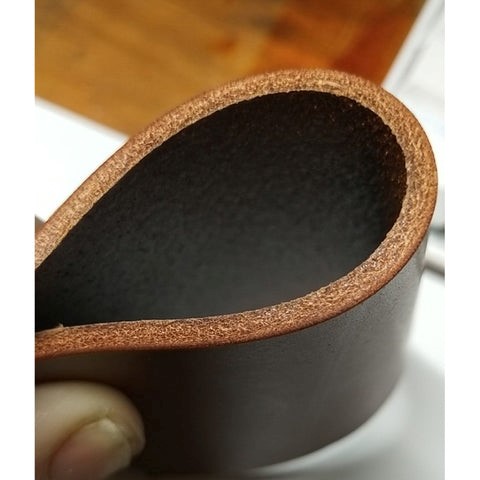
Inspect the Cutting Edge
A visible cutting edge (cross-section) can help you distinguish original leather. Natural leather is composed of a single layer, with a consistent color throughout. But the cross-section of artificial leather consists of multiple layers, each serving a different purpose. Furthermore, the color of each layer varies depending on the materials.
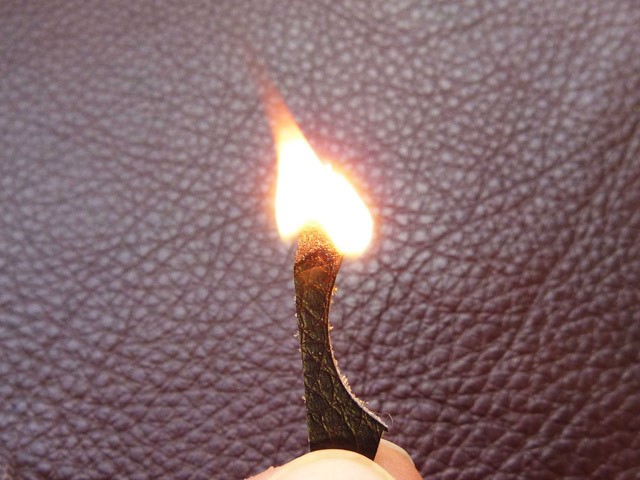
Behavior When Heated
There is a common misconception that authentic leathers do not burn in open flame but artificial leathers do. The fact is, some artificial leathers can resist open flame for some time, and genuine leathers get ignited after some time. But the actual leather takes more time to burn and give off the smell of burning fibers. Whereas synthetic leathers burn faster and gives a plasticky smell.
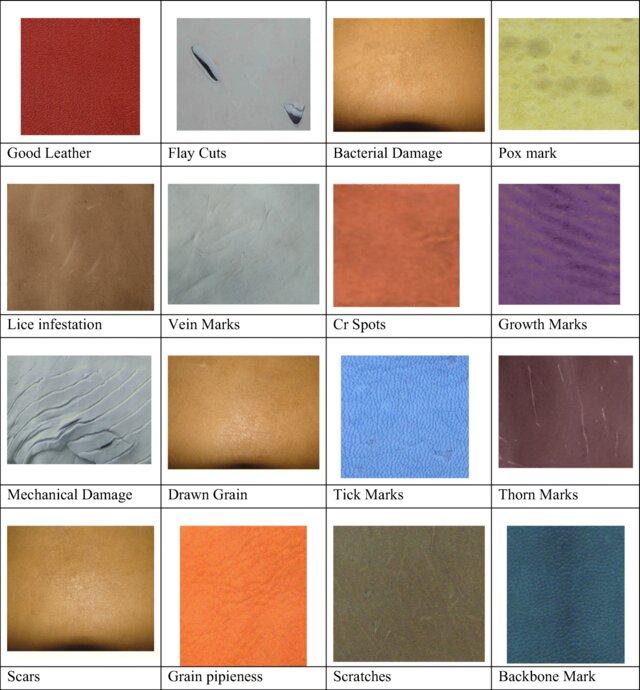
Look for Natural Damages
Similar to any other natural products, natural leathers are not perfect. Natural leather retains the natural marks and defects obtained during the lifetime of the animals. Even after high processing and intense finishing these defects still persist. They make the leather unique and are marks of authenticity. The artificial leathers do not contain these natural marks or defects.
Quick Reference Guide
Genuine Leather
- Uneven, fibrous reverse side
- Chaotic grain pattern & pores
- Single-layer cross section
Synthetic Leather
- Cloth-like or foam backing
- Too-perfect, uniform pattern
- Layered structure visible
Quick Leather Identification Tips
Price Check
Genuine leather is typically more expensive than synthetic alternatives.
Smell Test
Real leather has a distinctive, rich smell that synthetics can’t perfectly replicate.
Label Reading
Look for terms like “genuine leather” or “100% leather” on product labels.